grep command

The Linux grep command

The grep command is a very useful tool. When you master it, it will help you tremendously in your day to day coding.

If you're wondering, grep stands for global regular expression print.

You can use grep to search in files, or combine it with pipes to filter the output of another command.

For example here's how we can find the occurences of the document.getElementById line in the index.md file:

grep -n document.getElementById index.md
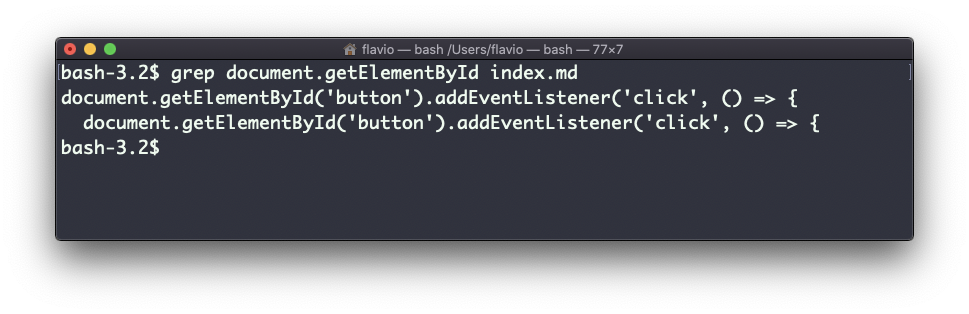
Screen-Shot-2020-09-04-at-09.42.10

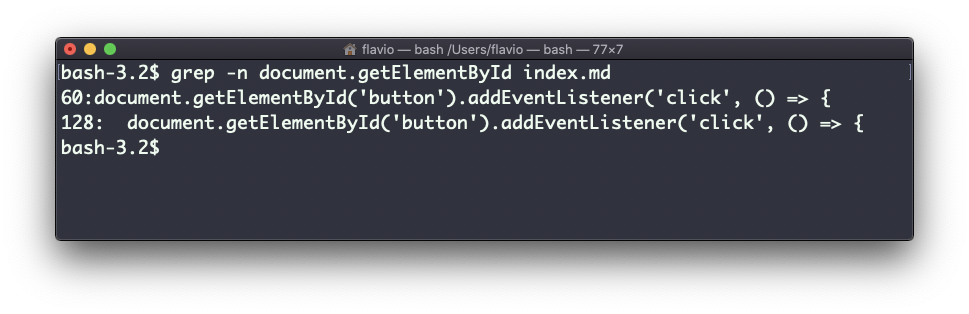
Using the -n option it will show the line numbers:

Screen-Shot-2020-09-04-at-09.47.04

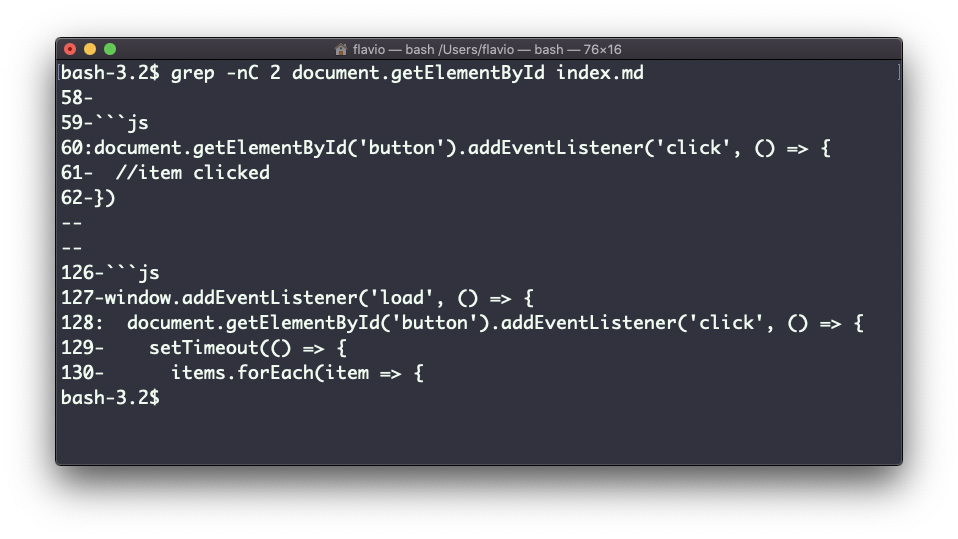
One very useful thing is to tell grep to print 2 lines before and 2 lines after the matched line to give you more context. That's done using the -C option, which accepts a number of lines:

Screen-Shot-2020-09-04-at-09.44.35

Search is case sensitive by default. Use the -i flag to make it insensitive.

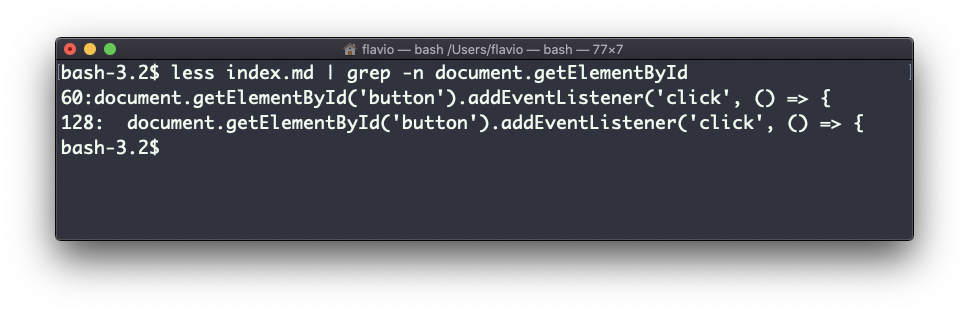
As mentioned, you can use grep to filter the output of another command. We can replicate the same functionality as above using:

Screen-Shot-2020-09-04-at-09.43.15

The search string can be a regular expression, and this makes grep very powerful.

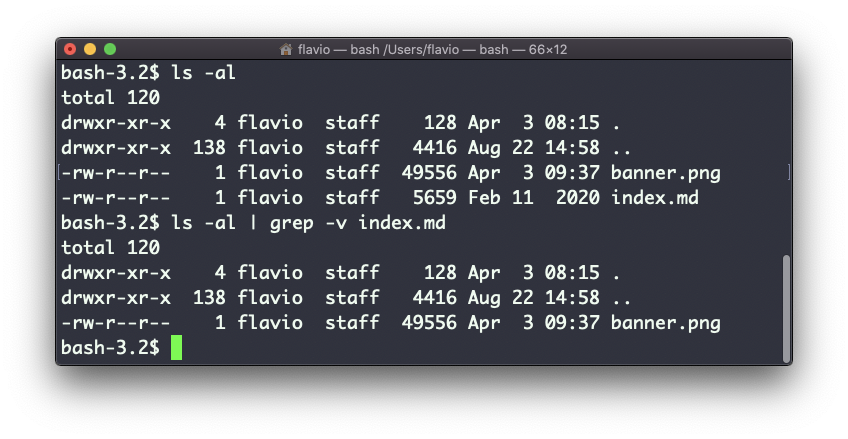
Another thing you might find very useful is to invert the result, excluding the lines that match a particular string, using the -v option:

Screen-Shot-2020-09-04-at-09.42.04

Last updated